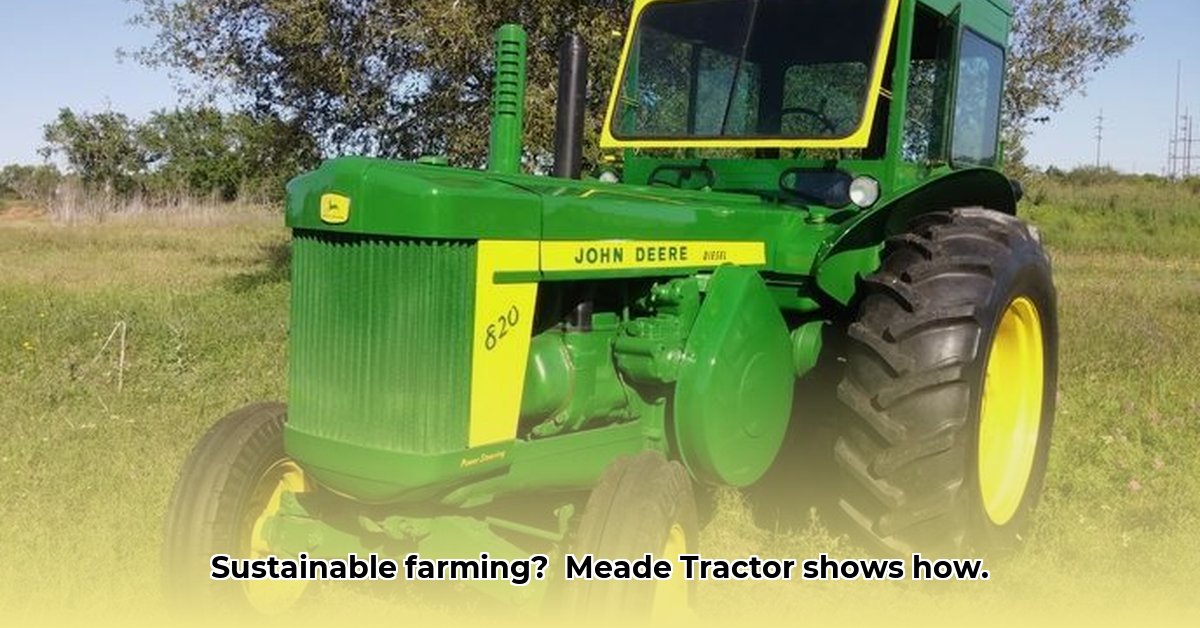
Meade Tractor's Role in Johnson City Agriculture
Meade Tractor, a John Deere dealership in Johnson City, provides farmers with essential machinery, parts, and services, including tractors, harvesters, planters, and related equipment. Their services are integral to local agricultural operations. However, the extent of their contribution to sustainable agriculture requires a deeper, data-driven analysis. For more information on sustainable farming equipment, check out this useful resource: tractor supply guide. This case study aims to assess Meade Tractor’s current practices and identify opportunities for improvement in promoting sustainable farming methods within the Johnson City community.
Assessing Sustainability: The Current Landscape
Currently, a comprehensive assessment of Meade Tractor’s environmental impact is limited by a lack of readily available data. While John Deere equipment can support sustainable farming through features like improved fuel efficiency and precision agriculture technologies, quantifiable evidence of Meade Tractor’s overall contribution remains elusive. This lack of transparency hinders a thorough evaluation. For example, we lack detailed lifecycle assessments (LCAs) of the equipment they sell, hindering a complete understanding of their environmental footprint. This is akin to judging a restaurant's quality without knowing the ingredients or preparation methods.
Digging Deeper: Data Gaps and Research Needs
To accurately assess Meade Tractor's sustainability, several key data points are missing:
Lifecycle Assessments (LCAs): Comprehensive LCAs for Meade Tractor's most popular John Deere equipment are needed. These should quantify the environmental impact from manufacturing, use, and disposal, considering factors such as energy consumption, greenhouse gas emissions, and waste generation.
Competitor Benchmarking: A comparative analysis with other agricultural equipment suppliers emphasizing sustainability is crucial. This will identify industry best practices and highlight areas where Meade Tractor can improve.
Regulatory Impact Assessment: An assessment of current and future regulations (e.g., emission standards, fuel efficiency requirements) is vital for strategic planning and long-term sustainability.
Risk Assessment: Identifying potential environmental risks associated with Meade Tractor's equipment (e.g., soil compaction, water pollution) is necessary for mitigation strategies.
Findings and Discussion: Preliminary Assessment & Opportunities
Based on the available (though limited) information, Meade Tractor's role in promoting sustainable agriculture is currently undefined. The absence of comprehensive data prevents a definitive conclusion about their contribution to environmental sustainability. However, several opportunities exist to strengthen their commitment:
Leveraging John Deere's Sustainability Initiatives: Meade Tractor can actively promote John Deere's advancements in fuel-efficient equipment and precision agriculture technologies. This includes farmer education, showcasing successful sustainable farming case studies, and collaborative efforts with local agricultural organizations.
Data-Driven Sustainability Goals: Setting specific, measurable, achievable, relevant, and time-bound (SMART) sustainability goals, including targets for reducing carbon footprint across their operations, is crucial for demonstrating progress.
Strategic Partnerships: Collaboration with local environmental groups and farming organizations can enhance Meade Tractor's understanding of community needs and facilitate shared sustainability initiatives.
Recommendations: Actionable Steps for Meade Tractor, Farmers, and Policy Makers
For Meade Tractor:
- Commission LCAs: Conduct independent lifecycle assessments for their key equipment. (Efficacy: Improved transparency and identification of environmental hotspots).
- Benchmark Against Competitors: Conduct a comprehensive sustainability benchmarking exercise against competitors. (Efficacy: Identify best practices and areas for improvement).
- Develop a Sustainability Report: Publish a transparent sustainability report detailing their progress and future targets. (Efficacy: Enhanced accountability and stakeholder engagement).
For Farmers:
- Adopt Precision Agriculture: Utilize GPS-guided machinery and other precision agriculture technologies to optimize resource use and minimize waste. (Efficacy: Reduced fuel consumption and improved efficiency).
- Utilize Fuel-Efficient Equipment: Opt for fuel-efficient equipment from manufacturers like John Deere available through Meade Tractor. (Efficacy: Lower fuel costs and reduced environmental impact).
- Implement Soil Health Practices: Adopt sustainable farming practices that improve soil health and reduce reliance on chemical inputs. (Efficacy: Enhanced soil fertility and reduced environmental damage).
For Government Stakeholders:
- Incentivize Sustainable Practices: Offer tax breaks or grants to farmers adopting sustainable technologies and practices. (Efficacy: Increased adoption of sustainable farming methods).
- Support Research and Development: Invest in research on sustainable agricultural technologies and practices relevant to the Johnson City region. (Efficacy: Development of innovative solutions for a more sustainable future).
Conclusion: A Path Towards Sustainable Agriculture
Meade Tractor holds significant potential to contribute to a more sustainable agricultural landscape in Johnson City. However, realizing this potential requires addressing existing data gaps through comprehensive research and implementing a proactive, data-driven sustainability strategy. Collaboration between Meade Tractor, farmers, and government stakeholders is essential for fostering sustainable agricultural practices and ensuring a healthier environment for future generations.
References
[1] (Insert citation for Nebraska Tractor Test Laboratory data if used)